

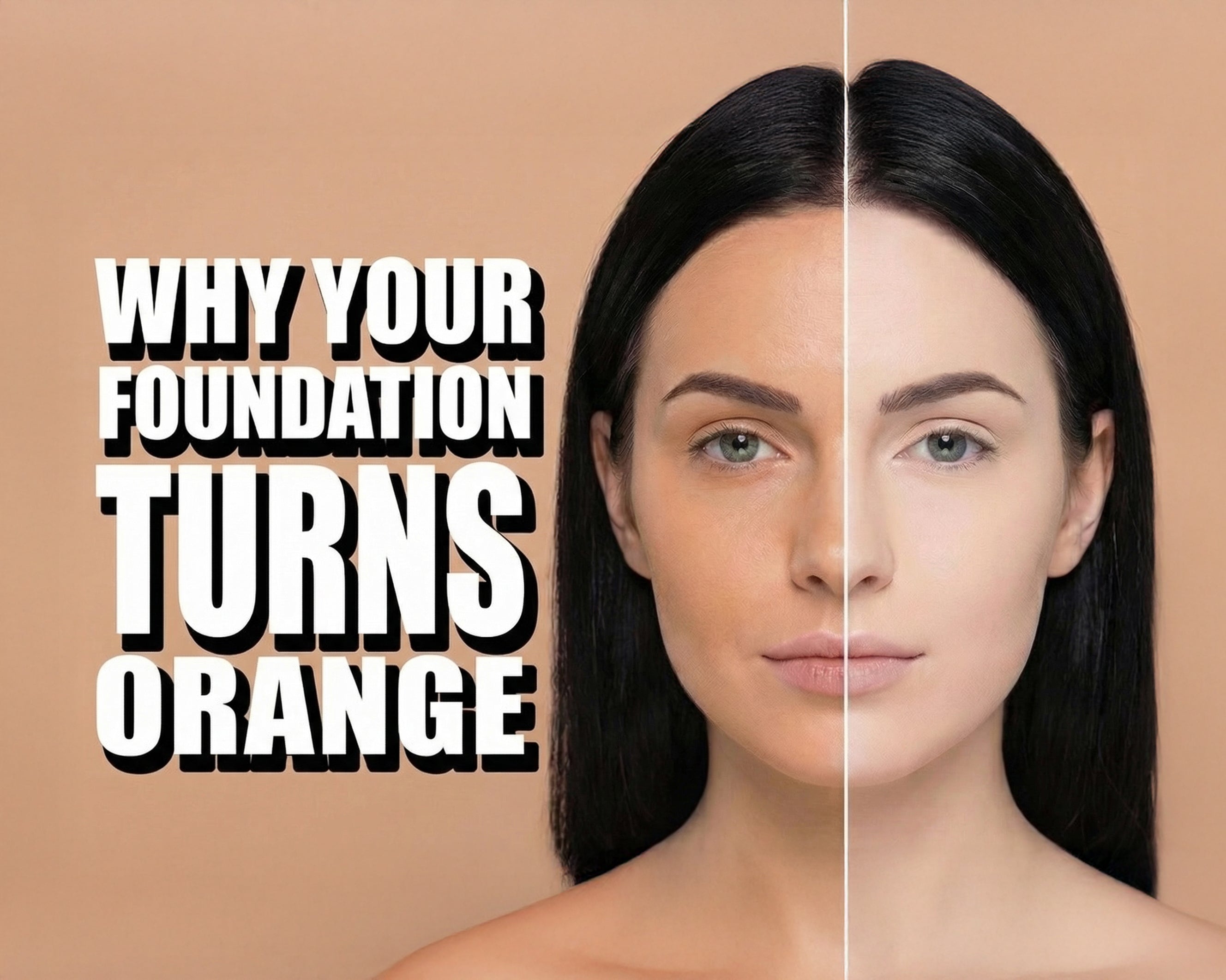
Why Your Foundation Oxidizes During the Day
Foundation oxidation is one of the most common issues people notice throughout the day, when their base starts to look darker, warmer, or slightly off.
Your foundation didn’t start out too dark.
But somewhere between your first coffee and your second mirror check—
it shifts.
A little deeper.
A little warmer.
A little less like your skin.
That subtle change has a name. Oxidation.
What Is Foundation Oxidation?
What is Foundation Oxidation?
Oxidation is what happens when your foundation begins reacting—with your skin, with air, with time.
Think:
-
natural oils
-
heat
-
exposure
-
formulation chemistry
It’s not dramatic.
It’s gradual.
But once you notice it, you can’t unsee it.
Why Oxidation Happens (And Why It Feels So Unpredictable)
1. Skin Oils, Quietly Changing Everything
Your skin produces oil all day.
And as that oil mixes with your foundation,
pigments can shift—subtly at first, then all at once.
This is why your base can look perfect… until it doesn’t.
2. Thickness Changes the Way Foundation Behaves
Foundation doesn’t just sit on the skin.
It builds.
And thicker layers?
They trap more heat.
Hold more oil.
Move less evenly.
Which makes them far more likely to oxidize.
3. It’s Not Just the Formula—It’s the Interaction
The same foundation can behave completely differently
depending on the skin underneath it.
That’s why switching products doesn’t always fix the issue.
Sometimes, the problem isn’t what you’re using.
It’s how it’s sitting.
Why Your Foundation Is Separating
In most cases, oxidation is not caused by a single factor—but by the combination of skin, formula, and application.
Why It Always Looks Fine at First
Because oxidation doesn’t happen on application.
It happens over time.
As your skin warms up.
As oils come through.
As layers begin to shift.
Which is why the mirror at 9am
and the mirror at 2pm
tell two very different stories.
What Actually Helps (Without Overcomplicating Everything)
Apply Less. Then Even Less.
Thinner layers don’t just look better—
they behave better.
They stay closer to the skin.
They react less.
They last longer.
It’s not about coverage.
It’s about control.
Rethink Your Tools
Not all tools apply foundation the same way.
Some deposit more product.
Some absorb it.
Some spread it.
And that difference?
It shows—hours later.
Why Your Makeup Tools Matter More Than You Think
Balance Before You Apply
Hydration matters.
Too dry → clinging
Too oily → breakdown
What you want is equilibrium.
Not perfect skin.
Just stable skin.
The Bigger Shift
Most people try to fix oxidation
by changing their foundation.
But often, that’s not where the problem starts.
It starts with:
-
how much you apply
-
how it’s layered
-
how it interacts with your skin
Final Thought
If your foundation keeps changing throughout the day,
it might not be the shade.
It might be the way it’s being worn.


